There are three ways to receive money from abroad into RedotPay. Which ones you can use depends on your country, and the app shows what’s open to you.
| Way in | Arrives as | RedotPay fee | Typical time |
|---|---|---|---|
| PayPal and similar platforms, sent to your RedotPay card | USDT | 3%, at least 1 USD | Shows as Pending while RedotPay processes it |
| Bank transfer to your own USD, EUR or GBP account | The same currency | None on deposits. Opening and yearly fees can apply | EUR, GBP: 1 business day. USD: same day to 5 business days |
| Crypto, for example a client paying in USDT | The same coin | None | About a minute on TRC20 |
Money from other people is the kind most likely to be held for review. Keep invoices and contracts for every payment you receive.
Paid mostly by companies on Upwork or Fiverr? See how RedotPay compares with Payoneer and Wise.
Need the money to go the other way, from your RedotPay balance to a bank account back home? See send money to a bank abroad.
PayPal and other platforms
RedotPay accepts transfers from platforms like PayPal to your RedotPay card. The money is converted to USDT and added to your balance.
- In PayPal, add your RedotPay card. A new card can take 2 to 5 days before linking works. Don’t retry many times in a row; repeated failures can freeze the card.
- The name and billing address on PayPal must match your RedotPay card.
- Withdraw or transfer to the card. If the app shows Pending, RedotPay has the money and is crediting it.
The fee is 3%, with a minimum of 1 USD. RedotPay says the feature works only in selected countries: if your transfer goes through, it’s supported where you are.
Bank transfer to a personal funding account
RedotPay can give you your own account details to receive bank transfers:
- USD: account name, account number, SWIFT/BIC and bank name;
- EUR: account name and IBAN;
- GBP: account name, account number and sort code.
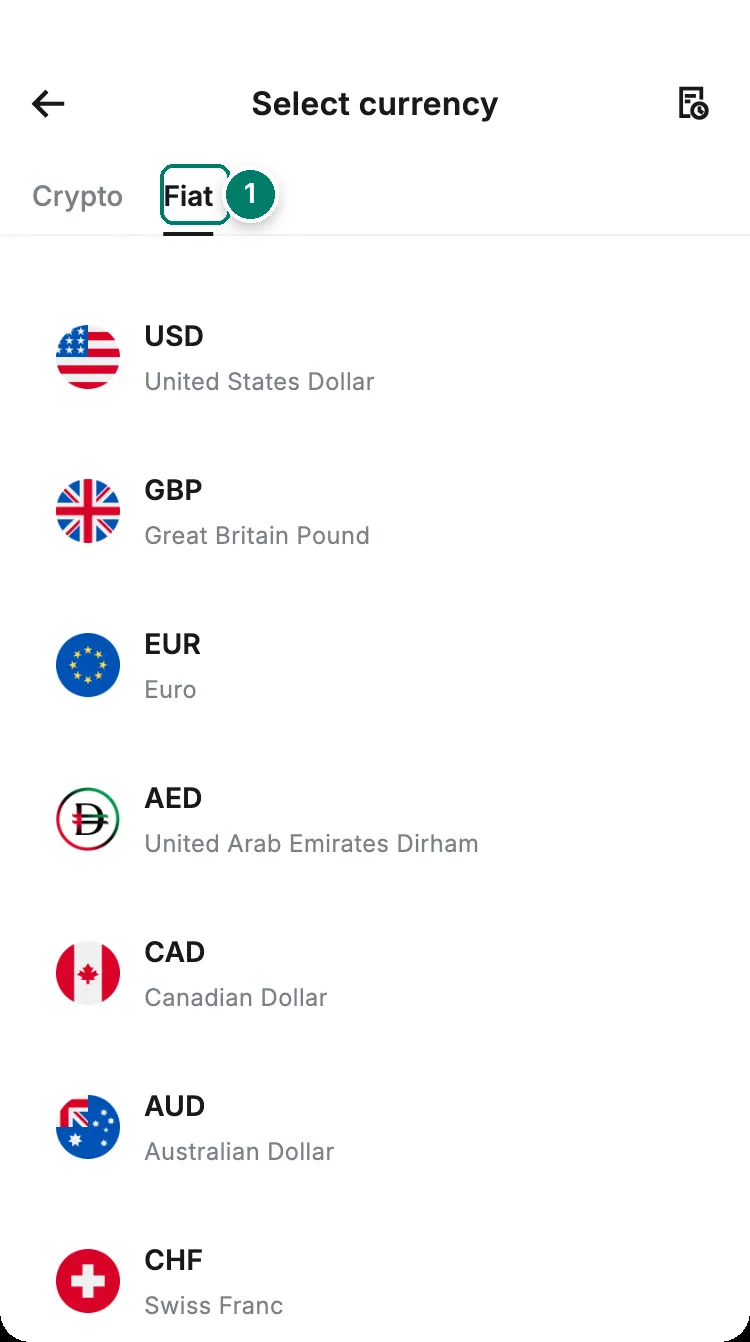
- Deposit → Fiat lists the currencies you can receive. There's no Algerian dinar, Egyptian pound, Moroccan dirham or Tunisian dinar.
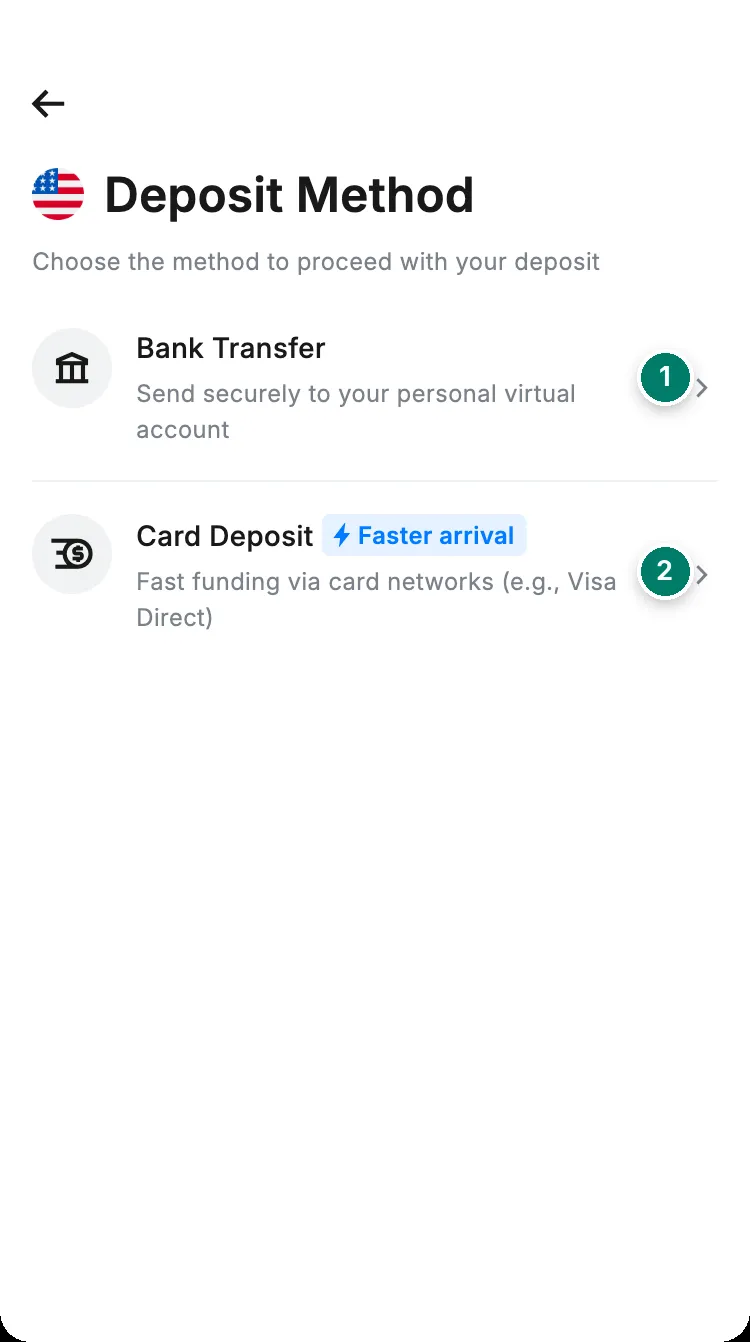
- Bank Transfer: send to your personal account details.
- Card Deposit: pay in with a card through the card networks, marked as the faster option.
What to know before you open one:
- Who can open it: it depends on your country. Check Deposit → Fiat in the app. You need a verified identity and must pass a short risk questionnaire (up to 5 attempts). Names are entered in English characters only.
- Opening fee: free if your RedotPay balance is at least 100 USD. Otherwise 6 USD, 6 EUR or 6 GBP.
- Yearly fee: avoided if at least 1,000 USD in total arrives in the first 11 months. RedotPay warns you in month 11. The amount isn’t published.
- Senders: deposits must come from a personal bank account. Transfers from company accounts may fail.
- Timing: EUR and GBP usually arrive the next business day, USD the same day or up to 5 business days. A compliance review can add 1 to 7 business days.
- RedotPay isn’t a bank. The accounts are provided by licensed partner institutions.
Personal funding account: the fine print
The rules RedotPay publishes for these accounts, beyond the basics above.
Sending money in
- Transfers go through the local payment network of each currency: SEPA for EUR, Faster Payments (FPS) for GBP; the method for USD is shown in the app when you deposit. Always copy the details from the app for that currency, and nothing else.
- The transfer must come from a personal bank account, so that the sender matches your verified identity. A company or business account doesn’t match and the deposit may fail.
- Each currency is a separate account: to hold USD and EUR, you apply twice. No card comes with it; apply for one separately.
Fees and timing
- RedotPay charges nothing on deposits in USD, EUR or GBP. If a deposit fails and is returned, the intermediary or receiving bank may take a handling fee out of the returned amount; that’s the bank’s fee, not RedotPay’s.
- Arrival: EUR and GBP usually the next business day (T+1); USD usually the same day, up to 5 business days. Counted from when your bank sends. A compliance review adds 1 to 7 business days; the status is in the app.
- Opening fee and yearly fee: see above.
Refunded deposits
- If a deposit has to be refunded, the refund channel or bank may charge a handling fee. On a small deposit that fee can exceed the amount, leaving nothing to return.
- A processed refund usually arrives in 3 to 7 business days, depending on your bank. RedotPay may ask for supporting documents first; the sooner you send them, the sooner it’s processed.
Taking money out
- EUR and GBP can be withdrawn to a linked bank account in the same currency: select the EUR or GBP balance, then withdraw. RedotPay’s article covers EUR and GBP only; for USD and local currencies, use the Send tab or P2P as described on the withdraw page.
- Once a deposit is in your balance you can also swap it to USDT or USDC, spend it with the card, or send an international transfer.
The questionnaire and extra documents
- The risk-assessment questionnaire is required by financial regulations. It asks about your source of funds, intended use and occupation, and you have up to 5 attempts.
- RedotPay may ask for more documents to meet AML and KYC rules, to verify your address or to confirm the source of funds. It says this is routine and doesn’t mean something is wrong. Name and address go in English characters; incomplete details delay the application.
Closing the account
You don’t need to: RedotPay tidies up inactive accounts on its own. To close one yourself, tap the USD, GBP or EUR account → … → Close account. To get it back later, you apply again. What to check before closing anything is on the delete page.
RedotPay isn’t a bank. The accounts come from licensed partner institutions, and the funds are held with them.
Crypto from clients
The cheapest option, if your client can pay in crypto: share your USDT address on TRC20 or BEP20. See how to deposit USDT, and always confirm the network with the sender.