Act in this order. The first two steps take a minute and stop further losses.
1. Freeze the card, and delete it if charges continue
On the Card tab, tap Freeze.
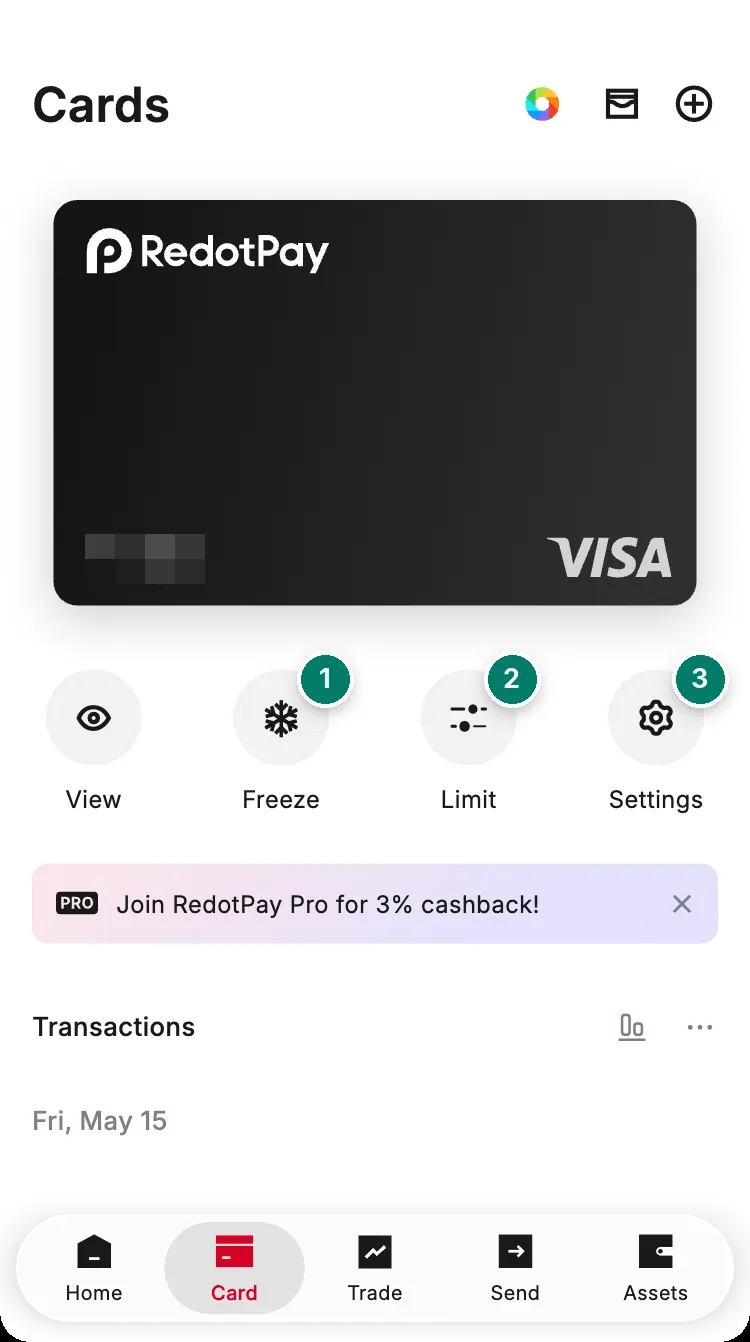
- Freeze: blocks new payments on this card. Your other cards keep working.
- Limit: lower the limits while you sort things out.
- Settings: security switches, and Delete card.
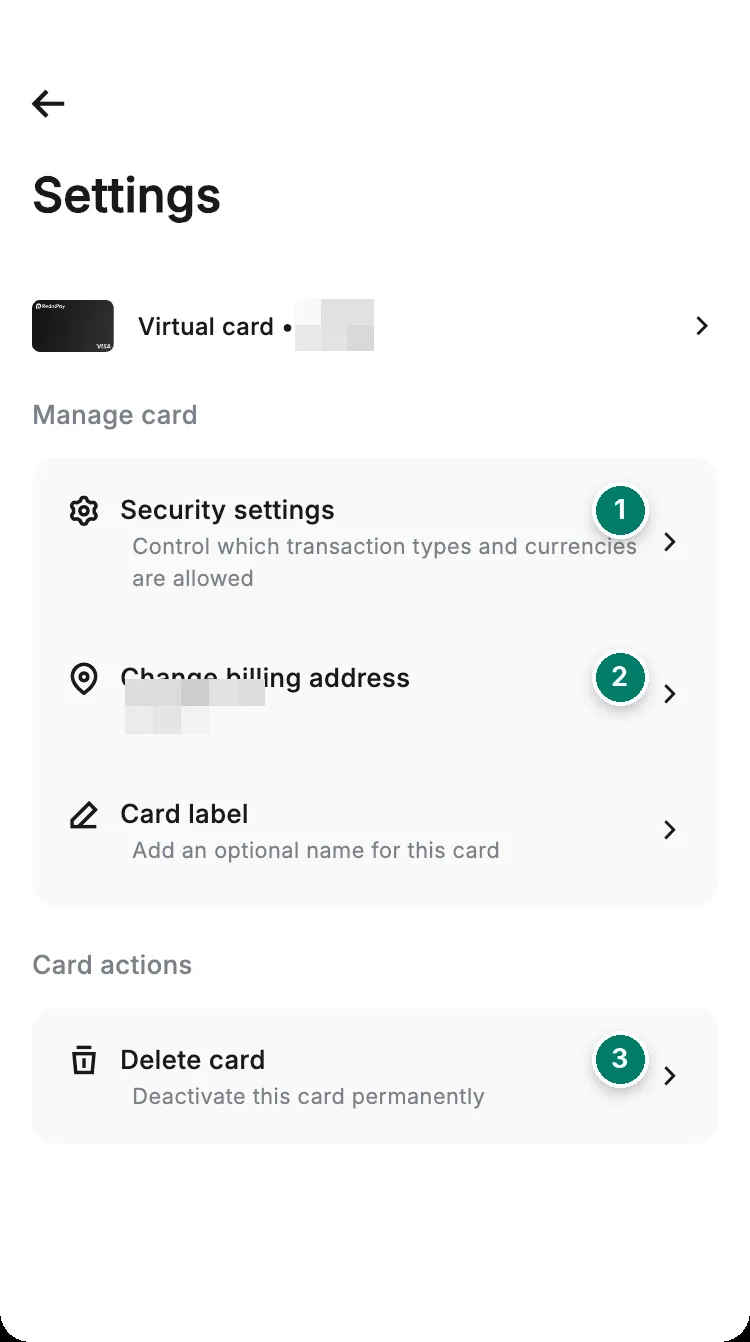
- Security settings: switch off online payments if the card details leaked online.
- Change billing address.
- Delete card: stops all charges on this card for good.
2. Check whether it’s really fraud
Many “unknown” charges turn out to be:
- a subscription renewing on a different date, or under a different company name;
- a hold that a merchant placed before the final amount;
- a foreign-currency payment that settled at a slightly different amount.
If you recognise the merchant, ask them for a refund first. RedotPay can’t cancel a subscription for you; cancel it on the merchant’s site.
3. Report fraud in the app
- Open the transaction in your history.
- Tap the ? icon in the top corner.
- Tap Report fraud.
RedotPay reviews the report, then sends eligible cases to the card network. That step usually takes 1 to 3 months, and the network, not RedotPay, decides the outcome.
What doesn’t count as fraud
- A subscription or renewal you agreed to.
- Someone you allowed to use the card.
- A payment approved with your PIN, a 3D Secure code, your fingerprint or face, Apple Pay or Google Pay.
- Goods that never arrived, or a refund the merchant won’t give. That’s a consumer dispute, below.
Consumer disputes and failed ATM withdrawals
If a merchant didn’t deliver, or an ATM charged you without giving cash and the bank couldn’t fix it, you can ask for a chargeback.
| Step | Official detail |
|---|---|
| Eligibility | Support checks the case first |
| Fee | 50 USD per transaction, paid up front once eligible |
| Time | Usually 3 to 6 months, longer for complex cases |
| If the merchant fights it | “Pre-arbitration” costs 700 USD per transaction, refunded only if you finally win |
Neither step is guaranteed to succeed. Weigh the fee against the amount before you start.
Have these ready: transaction ID, date, amount and merchant; your registered email, name and billing address; the card’s last 4 digits and expiry; what you did to contact the merchant; receipts, tracking or refund records; a timeline; and a police report if you have one.
Prevent the next one
- Never type your card number, expiry or CVV on a site you don’t trust.
- Switch off online transactions on a card you only use in shops, and the reverse.
- Turn off currencies you never pay in.
- Keep a separate card for subscriptions, and remove it from services you stop using.
More in protect your account.